Trivedi's Dhaka Mission: Hope, Challenges and Prospects
Abu Sufian
Diplomatic Editor
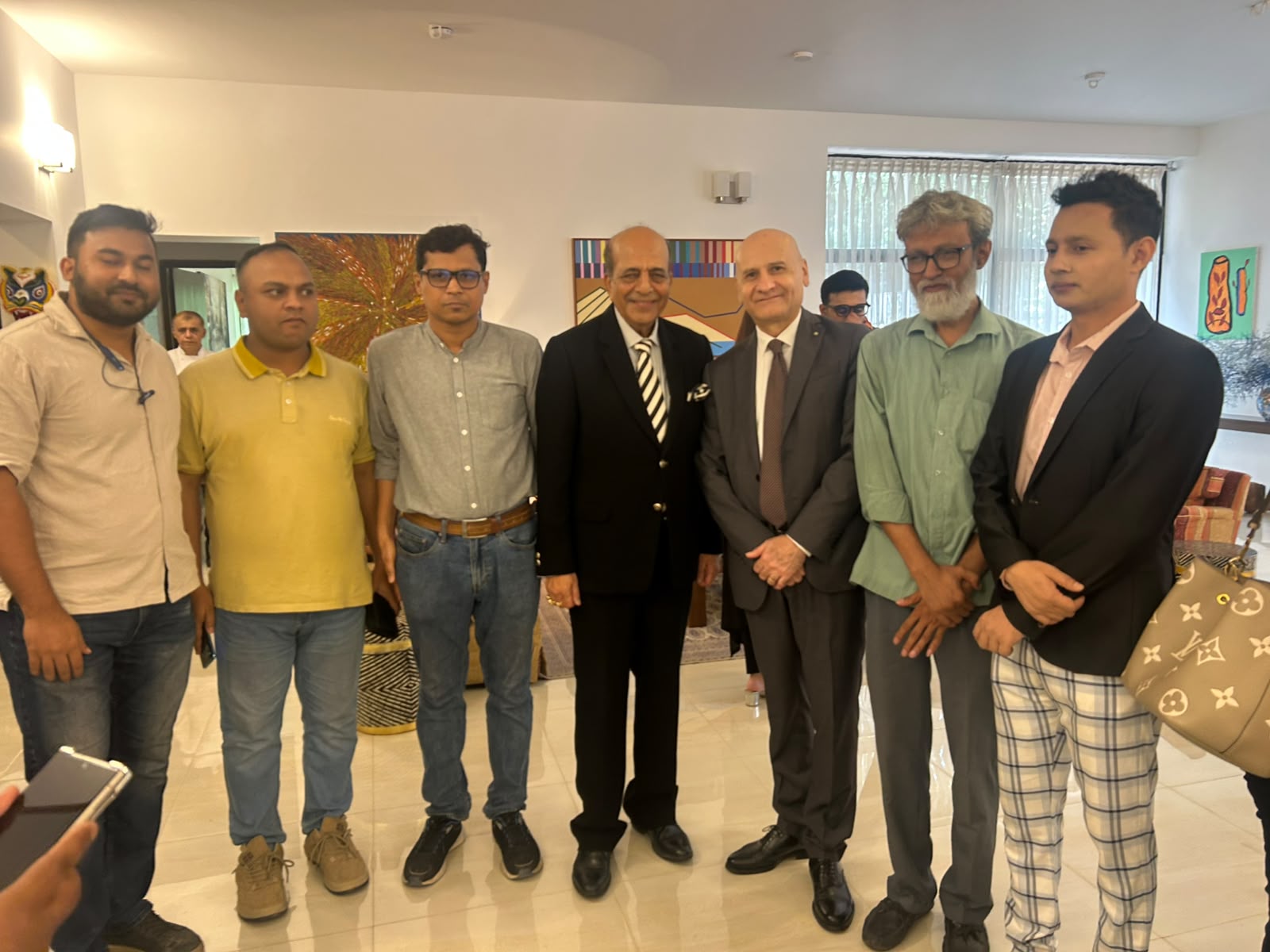
1st July marked the tenth anniversary of the emergence of militancy in Bangladesh in its most terrifying form. The Italian Ambassador to Dhaka, Antonio Alessandro, organized a memorial at his residence to remember the victims of the horrific attack on the Holy Artisan Bakery. Ambassadors from several foreign missions gathered there, including the Ambassador of the European Union, the Indian High Commissioner, the Ambassador of Japan, the Ambassador of Palestine, the Consul General of the United States Embassy, and other diplomats.
After commemorating the victims of the Holy Artisan attack with due dignity, diplomats, family members of the victims, and diplomatic correspondents from various media outlets in Bangladesh participated in a lunch hosted by the Italian Ambassador.
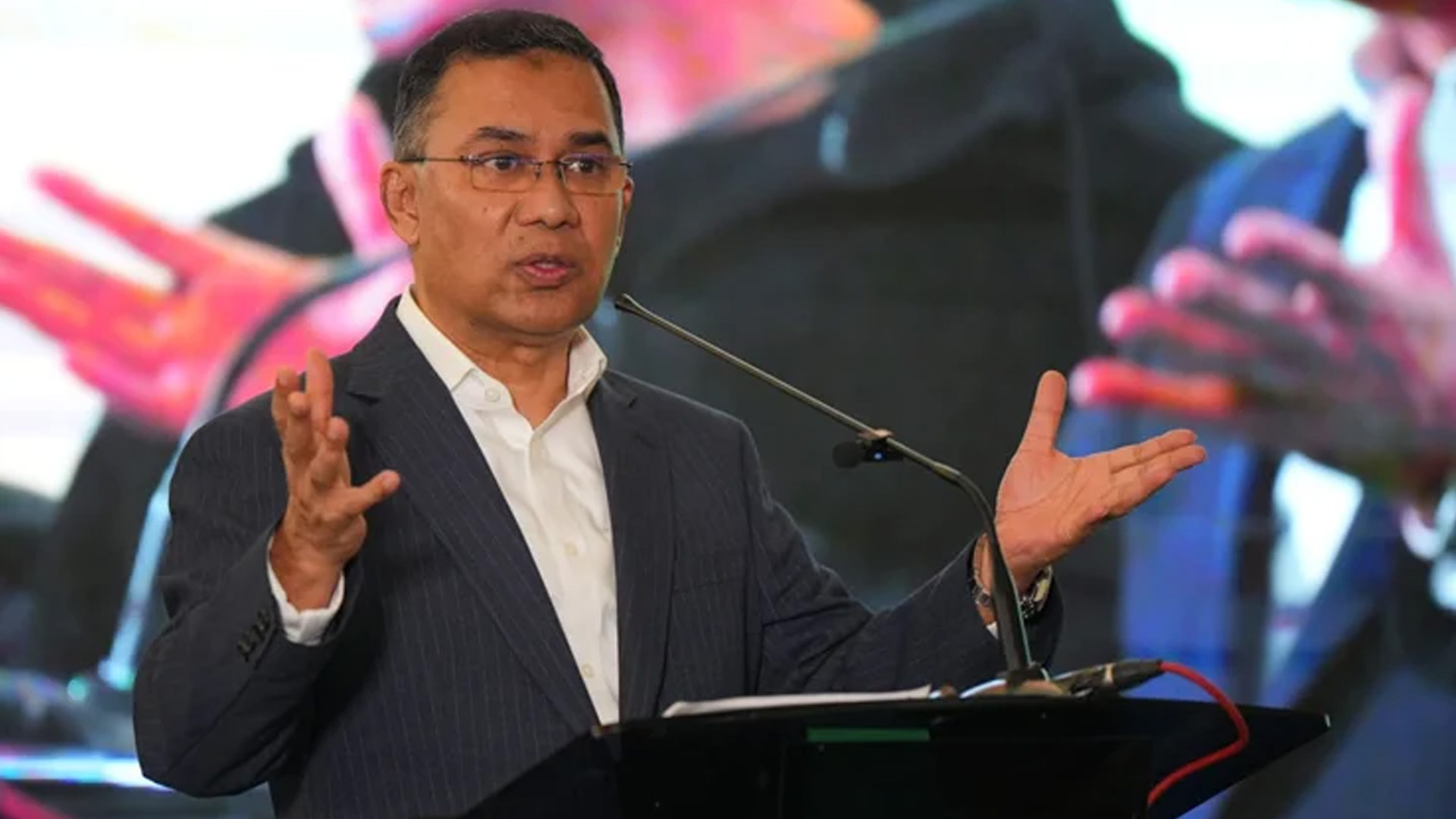
At the event, a warm and meaningful discussion took place with the newly appointed Indian High Commissioner, Dinesh Trivedi. The conversation with journalists lasted about an hour. Topics included his experience of taking on new responsibility, the current political context in Bangladesh, the future of bilateral relations, existing obstacles, the appropriate ways to move relations forward, and building closer people-to-people ties.
His Attitude Towards Bangladesh and Its People
Dinesh Trivedi strongly believes in people-to-people relations. He enjoys a good reputation in Indian politics. After beginning his career as a government official, he rose to become a minister in the central government of India. This is his first diplomatic assignment. He was not asked whether he would serve in any other country after Bangladesh. However, I was particularly interested in learning about his approach to improving relations with the Bangladeshi people.
The summary of his views on this subject is roughly as follows. First, he emphasized that Bangladesh and India are two independent, sovereign states. He highlighted the geographical proximity of the two countries and the joint struggles of their people at every crucial turn in history. He spoke warmly of the strong bonds between the two nations—from liberation from British colonial rule to Bangladesh’s Liberation War and its aftermath. While discussing this historical bond, his speech reflected deep respect for Bangladesh as a state and for its people. Talking to us, he seemed to be chatting with close friends. He spoke like a friend and even sought our advice on how to improve relations. Overall, there was no lack of sincerity in his efforts to strengthen bilateral ties.
Avoiding Bureaucratic Complications
This minister-rank ambassador posted to Bangladesh has sent a very strong message. He will not always remain confined within the so-called protocol fence. He does not want to use overly formal diplomatic language when interacting with people. In his words, “Look, I do not want to follow those rules and regulations. They (High commission officials) want to confine me in various ways. I will not let that happen. I come from politics. I have a habit of being with the people. So they will not be able to confine me even if they want to. I will maintain personal relationships with you.”
This was not an official interview with the Indian High Commissioner. Therefore, there was no opportunity to record the conversation or seek permission to do so. It is not possible for me to quote his exact words. These remarks carry no official weight and should be seen only as a personal conversation during lunch. Nevertheless, his attitude became quite clear off the record.
People-to-People Connections
The recently departed former Indian High Commissioner, Prannoy Verma, failed to ease India’s visa requirements for Bangladeshis—perhaps due to bureaucratic complications. However, on his first day in office, this minister-level ambassador, immediately after presenting his credentials to the President, clearly told reporters that all types of Indian visa procedures would resume from June 28. He reiterated this point with us. He said, “The first thing I wanted to do when I came here was to resolve the problems faced by the people. Many people travel to India for medical treatment or shopping. There is no point in making it difficult for them. I wanted to resolve this issue as soon as possible. So the first step I took was to ease the suffering of the people by resuming the visa process. This way, people-to-people relations will not come to a standstill.”
I particularly appreciated this part of his speech. Tensions between two countries can and will arise. When two countries are neighbors, relations sometimes warm and sometimes cool. This is normal. But these are political and diplomatic matters. The common people are not that much involved in them. Therefore, his decision to fully reactivate the visa process deserves applause.
We also informed him about irregularities in the visa process. A Bangladeshi broker gang is trading visa appointment slots. Viral social media videos show that some people are paying between one and one-and-a-half lakh taka to secure appointments.
As soon as this issue was brought to his attention, he asked his colleague to note it down and assured us that action would be taken soon.
“I Will Take Nine Steps”
Politicians love making promises. Dinesh Trivedi is no exception. When one of our colleagues asked about India’s position on launching rail communication over the Padma Bridge, his straightforward reply was: “If the Bangladesh government takes one step, I will take nine steps.” This is also a promise, but it reflects a genuine desire to build excellent relations with Bangladesh.
During the luncheon, the Indian High Commissioner paid more attention to the journalists than the diplomats. In the middle of the discussion, the host, the Italian Ambassador, jokingly remarked, “Look, all the journalists in Bangladesh are busy with you.” Dinesh Trivedi smiled gently and included his Italian fried in our conversation. After taking a group photo and exchanging views, he bid us farewell, expressing his hope to sit with the journalists for a longer discussion soon.
Bangladesh and India are interdependent. Instead of using servile phrases such as “India is all around us,” it is better to echo Dinesh Trivedi’s words: “We are not big and small.” If two independent countries work together with mutual respect, both will achieve greater security and stronger economies. As a senior and experienced politician, the new ambassador surely understands that one-sided dependence ultimately causes long-term damage.
In the coming days, Dinesh Trivedi will be expected to engage with the government, opposition parties, grassroots political forces, civil society representatives, religious leaders, businessmen, farmers, and working people. He will hopefully ensure that his officials do not repeat the mistakes of previous High Commissioners. Dinesh Trivedi has vast experience in winning people’s hearts, which I felt during our face-to-face meeting. When hearts can be won through words, sincerity, and love, there is no need to interfere in internal politics or adopt a bossy attitude.
I found the newly appointed Indian High Commissioner to be sincere and experienced. We hope that, through mutual respect and recognition of each other’s needs, India-Bangladesh relations will reach new heights. A positive first step toward warming this relationship could be the extradition to Bangladesh of court-convicted murderers, including Sheikh Hasina, currently in India. Let justice be the foundation for strengthening ties.